Ostia Antica: Rome's Hidden Ancient Ruins (Better Than Pompeii for Day Trips)
The Ruins 10 People Know About vs. the Ones 10 Million Don't
Everyone's heard of Pompeii. Long lines, expensive tours, hours of travel, and then you're herded through ruins with 5,000 other people. But 20 kilometers outside Rome, there's an archaeological site just as historically significant, better preserved than most, and practically empty of tourists. It's called Ostia Antica. And you can reach it in 30 minutes for €1.50.
This is the day trip Roman locals actually take. And the best part? You've probably never heard of it.
What Is Ostia Antica?
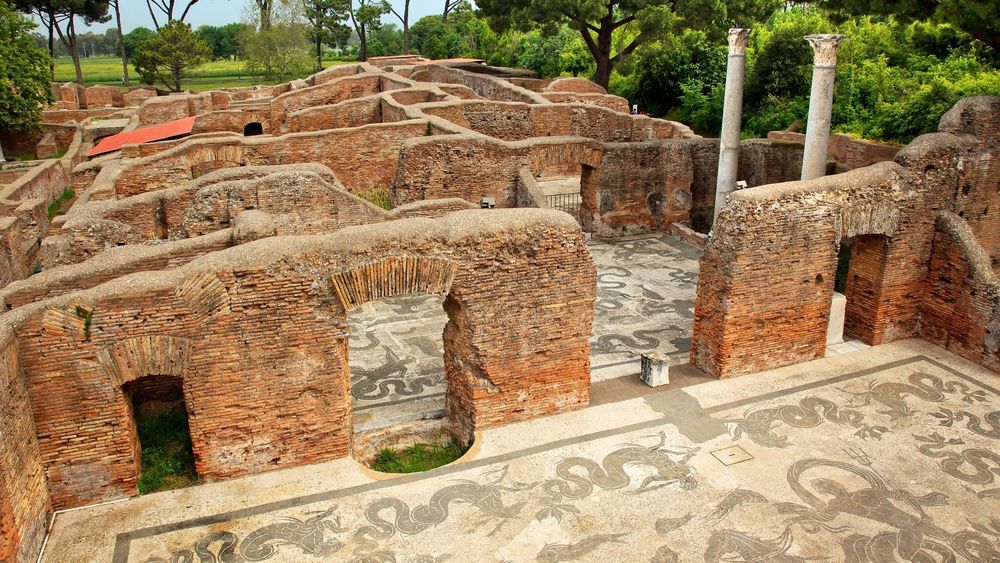
Ostia was Rome's port city. From around 400 BC until the 5th century AD, it was the busiest harbor in the Roman Empire—the gateway where all imports and exports passed through. Ships filled with grain, wine, oil, and luxury goods from across the Mediterranean docked here daily. It was a working city: merchants, sailors, dock workers, families, temples, bathhouses, bakeries, apartment buildings (insulae), and administrative offices.
Then the Tiber River silted up. Trade moved elsewhere. The city was abandoned. And for 1,500 years, it sat buried under layers of earth, away from the plunder and destruction that affected Rome itself.
What emerged when archaeologists started digging in the 1800s was extraordinary: an almost completely intact Roman port city, frozen in time. Streets you can walk on. Taverns you can sit in. Apartment buildings where you can see how ordinary Romans actually lived (spoiler: cramped and urban).
Why Ostia Antica Is Actually Better Than Pompeii
Pompeii is famous. Ostia Antica is better.
Size & Scope
Ostia covers 69 acres (nearly 28 hectares) of actual ruins. You can walk the entire site in 2-3 hours and see temples, theaters, shops, homes, mosaics, sculptures, and intact street grids. Pompeii is three times larger and requires a full day.
Crowds
Pompeii sees 3 million visitors per year. Ostia Antica sees maybe 750,000. On any given day, you're wandering between tourists only in specific spots. The rest is quiet, almost meditative.
Authenticity
Pompeii was buried by ash and pumice, which preserved it in eerie detail but also means most artifacts are in museums. Ostia was slowly abandoned and gradually buried by river silt—which means less dramatic preservation but also the site itself still has original sculptures, mosaics, and objects in situ. You're seeing the site, not just the outline.
Walking Experience
Pompeii is linear: you walk the same streets as thousands of others, herded by the tour guide. Ostia has multiple loops and unmarked paths. You can get genuinely lost in a good way, discovering hidden areas tourists miss.
Time Investment
Pompeii requires a full day (6-8 hours). Ostia is 2-3 hours comfortably, making it a perfect half-day addition to your Rome itinerary.
How to Get There (The €1.50 Option)
By Train (Cheapest & Easiest)
From Roma Termini, take the metro (Line B, blue) or any train heading south to the Lido (Ostia Lido direction). Ask for "Ostia Antica" station—not "Ostia Lido," which is the beach.
The journey is 30 minutes. Cost: €1.50 (included in a Roma day pass).
When you get off at Ostia Antica, you'll see a clearly marked path to the archaeological site. It's a 5-minute walk past some modern houses and through a parking area. The entrance is at the far end.
By Car (If You're Renting)
Ostia is 30 km southwest of Rome via the S148 road. Parking is free at the site. Drive time from Termini: 45 minutes depending on traffic. But honestly, the train is simpler and cheaper. Don't rent a car just for Ostia.
What to See at Ostia Antica
The Main Decumanus (Main Street)
The widest street, lined with shops and warehouses (horrea). These are 3-4 story buildings where Rome stored grain for the city—some had capacities of 300+ tons. You can walk down the street and imagine merchants haggling, sailors loading cargo, the smell of fish and salt.
The Theater
A 2,000-seat Roman theater (built around 12 BC) still mostly intact. You can climb to the top and see where the stage was, where actors performed, where audiences sat. The acoustics still work—clap in the center and hear it echo back.
The Forum
The town center. Surrounded by porticoes, with temples and administrative buildings overlooking it. This was where daily life happened: markets, announcements, meetings.
Houses & Apartments (Insulae)
Unlike Pompeii, where you see a few preserved upper-class homes, Ostia shows working-class apartments. The insulae were like modern apartment blocks—three stories, no running water in individual units, communal bathrooms and kitchens at the ground level. You can actually enter some and see the layout.
This is the most fascinating part. Most people only see elite Roman homes in museums. Here you see how 99% of Romans actually lived.
Mosaics & Sculptures
Scattered throughout are original mosaics (some still colorful) and sculptures. No velvet ropes—you're just walking past genuine Roman art in its original context.
The Sacred Area
Multiple temples clustered together. Partially excavated, you can see where priests performed rituals and where statues once stood. The museum nearby has statues and objects found on-site.
Practical Information
Hours
8:30 AM – 7 PM (summer); 8:30 AM – 4:30 PM (winter). Closed Mondays.
Arrive early (before 10 AM) if you want solitude. By 11 AM, school groups arrive. By 3 PM, it quiets again.
Entrance Fee
€8 (€4 for EU residents under 25). Children under 18 free. Buy at the gate—no advance booking needed or possible.
What to Bring
Water (essential—no shade except museum building). Hat/sunscreen (2-3 hours direct sun). Comfortable walking shoes (uneven terrain). Snacks (no food stands on site, but vending machines outside).
Best Time to Visit
May-June or September-October. Hot in July-August (35°C+, no shade). Winter is cold and can be muddy.
How Long?
2-3 hours if you want to see everything leisurely. You can do it in 1.5 hours if you rush, but the site deserves time. Bring a book and sit on a bench in the forum for 15 minutes. That's the Roman experience.
Combining Ostia Antica with Other Stops
Since Ostia is 30 minutes from central Rome, you can easily combine it with other activities:
Morning: Ostia Antica (2.5 hours) → Lunch near the site → Return to Rome by 2 PM for afternoon activities.
Or: Ostia Antica early → Leonardo Express train to Fiumicino Airport in the evening (connects directly from Ostia train station).
A Bit of History: Why It Matters
Ostia is one of the best-preserved Roman port cities in the world. Unlike Pompeii, which was preserved by catastrophe, Ostia was preserved by abandonment—which means the archaeological record is more complex and interesting. You're seeing not just a moment in time, but layers of history: when the port was built (4th century BC), when it thrived (1st-2nd century AD), and when it was abandoned (5th century AD).
For archaeologists, Ostia has been revolutionary. Understanding how ports worked, how ordinary people lived, how trade functioned—all of this comes from Ostia. It's not just famous ruins; it's evidence of how the Roman world actually worked.
Why You Should Go Alone, Not on a Tour
Yes, there are guided tours of Ostia. And yes, they're nice. But the whole point of Ostia is that it's quiet. A tour group defeats that purpose. Buy your train ticket, show up early, and wander on your own. If you want context, grab the audioguide (€5) at the entrance. Or just walk, imagine, and let the ruins speak for themselves.
Ostia Antica is the day trip that teaches you more about Rome than any other—because it shows you Rome as it actually was: a working city of ordinary people, not just emperors and monuments.
Explore Rome & Beyond with TikTours
Rome's history extends far beyond the central monuments. TikTours has free audio guides that explore neighborhoods, lesser-known sites, and the actual daily life of the city. Download the app and discover Rome the way locals do—stories, context, and real places, not just the Instagram checkboxes.